


Topics Covered
Tags
Published on
Read time: 6 minutes
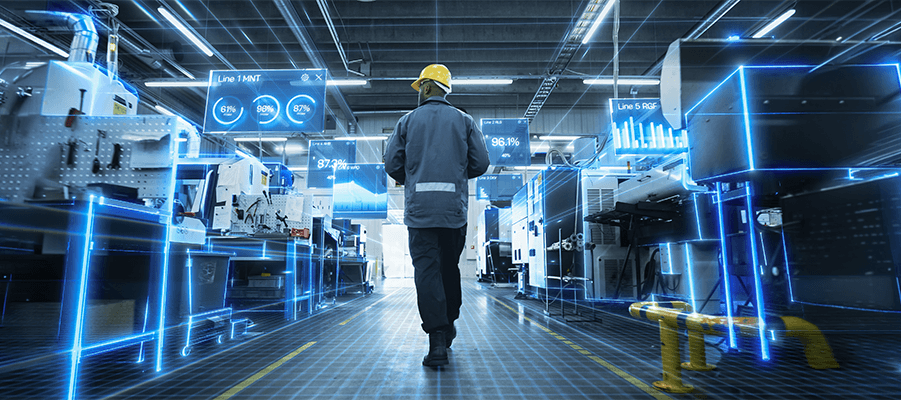
Despite having access to more information than ever, manufacturers continue to struggle in answering some of the most fundamental questions about their operations. Things like:
How much inventory do we really have? Where is it located? Which parts are critical to production, and which are simply consuming working capital? Perhaps most importantly, can we trust the data that informs those decisions?
These questions sit at the heart of a challenge that is becoming increasingly difficult to ignore. While organisations continue to invest heavily in digital transformation, automation and advanced analytics, many remain hindered by a far more basic problem: limited visibility into their MRO supply chain.
It is a challenge that ripples across procurement teams, maintenance professionals, operations leaders and executive decisionmakers. And in today’s manufacturing environment, where resilience, cost control and operational performance are under constant scrutiny, the ability to see clearly is rapidly becoming a defining competitive advantage.
The Hidden Cost of Poor Visibility
When discussions around supply chain performance arise, the focus is often around strategic sourcing, logistics or supplier risk. These areas undoubtedly matter, but there is another opportunity hiding in plain sight. MRO inventory.
For many manufacturers the MRO supply chain has evolved over decades. New facilities have been added. Systems upgraded or replaced. Acquisitions have introduced different operating models, data standards, and even tracking software. Thousands of inventory records have been created, modified and inherited by successive teams.
Over time, even well-managed environments can become fragmented. The result is often a disconnect between what exists physically on site and what appears in enterprise systems. Duplicate inventory records begin to emerge. Material descriptions become inconsistent. Critical attributes are missing. Supplier information grows outdated. Similar items are classified in completely different ways. Discipline is lost.
Individually, these issues seem relatively minor. Collectively, they create operational challenges that can be difficult to quantify but impossible to ignore.
When organisations lack confidence in their own inventory data, they compensate by carrying additional stock, purchasing duplicate materials or maintaining larger safety inventories than necessary. While intended to reduce risk, this approach often has the opposite effect, locking up capital while masking the underlying issue.
The challenge is not simply excess inventory. It is uncertainty. And uncertainty is expensive.
Why Data Quality Has Become a Business Priority
For years, inventory management initiatives were largely viewed through the lens of cost reduction. The objective was straightforward: reduce stock levels and improve inventory turns. Today, the conversation has evolved.
Manufacturers are operating in an environment shaped by fluctuating lead times, changing market conditions, workforce challenges and increasing pressure to improve asset performance. Decisionmakers are expected to manage inventory more efficiently while making faster, more informed decisions to balance risk, resilience and operational continuity.
That becomes extraordinarily difficult when the underlying data cannot be trusted.
When inventory records are accurate, manufacturers can identify duplicate materials across facilities, understand inventory criticality, improve sourcing strategies, reduce unnecessary purchases and make more confident decisions regarding stock optimisation.
More importantly, they can transition from reactive management to proactive planning.
That shift changes everything.
The Promise and Reality of Artificial Intelligence
Artificial intelligence is driving significant changes across the supply chain industry. But one of its most promising applications is simple. Understanding inventory data.
New technology can analyse millions of inventory records in a fraction of the time traditionally required. It can identify similarities between materials, highlight duplicate records, classify inventory, enrich incomplete descriptions and reveal opportunities that would be nearly impossible to uncover through manual analysis alone.
Suddenly, organisations gain visibility into patterns and relationships that have been hidden within their data for years. Yet technology, on its own, is rarely enough.
MRO environments are inherently complex. Equipment specifications, maintenance requirements, engineering standards, operational criticality and site-specific practices all influence how inventory should be managed. Understanding those nuances requires experience.
The most successful organisations are combining the strengths of both artificial intelligence and human expertise. Advanced technologies help uncover insights at scale, while experienced practitioners provide the context needed to convert those insights into meaningful business outcomes.
Looking Beyond Inventory Reduction
Too often, inventory projects are measured solely by how much stock is removed from the balance sheet.
While inventory optimisation remains an important objective, leading manufacturers are beginning to recognise that the greatest value lies elsewhere.
Improved visibility creates a ripple effect that extends throughout the enterprise.
Procurement teams gain greater confidence in purchasing decisions. Maintenance teams spend less time searching for parts and more time focused on reliability. Operations leaders acquire a clearer understanding of critical inventory risk. Executive teams benefit from improved working capital and stronger operational resilience.
These outcomes are interconnected. As visibility improves, decision-making improves. As decision-making improves, performance follows.
When viewed through that broader lens, inventory visibility moves beyond a supply chain initiative and becomes a business improvement strategy.
Building the Foundation for Operational Excellence
Every manufacturer is searching for new ways to improve productivity, reduce risk and strengthen resilience. Yet many are attempting to build those capabilities on a foundation of incomplete or inconsistent information.
Before optimising inventory, improving asset reliability or fully capitalising on emerging technologies, they must first address a more fundamental question. Can they see clearly enough to act confidently?
The answers often reside within the data they already possess.
When manufacturers invest in inventory visibility, data quality and intelligent analysis, they unlock opportunities that extend far beyond cost savings. They create conditions for better planning, stronger reliability, improved procurement performance and more informed business decisions at every level.
In an increasingly competitive environment, visibility is no longer a supporting capability.
It is becoming a strategic differentiator.
Companies that understand what they own, where it resides and how it supports operational performance will be better positioned to navigate uncertainty, respond to change and uncover value that others simply cannot see.
And that may be one of the most significant competitive advantages available today.
How much hidden value exists within your MRO inventory?
Explore more insights, best practices and strategies for improving inventory visibility, strengthening reliability and driving operational excellence at www.rs-integratedsupply.com. Start the conversation with an expert and discover what better visibility could mean for your organization.